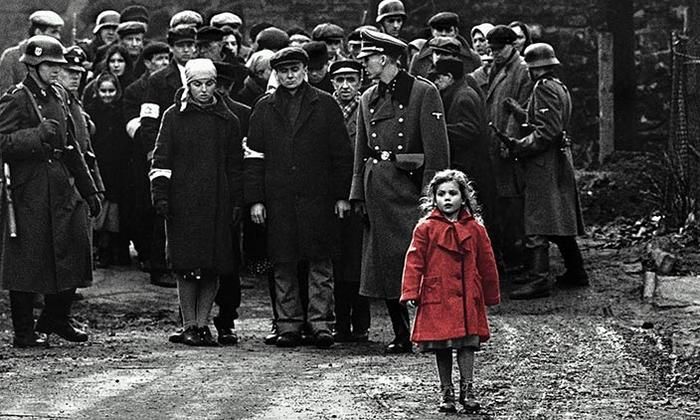
The lack of color in Schindler’s List is the most important artistic aspect in the film, as it deepens the impact of how the viewers perceive the holocaust and shapes their understanding of the events that occurred.
The black and white cinematography brings viewers closer to the events that happened during the Holocaust by resembling a historical photograph from the era. The visuals of the film make it feel like a documentary, enforcing the realism of the events and reducing the risk of romanticizing them. Color is usually associated with vitality and warmth, and its absence in the film was important to convey a time when hope was wiped out, and Spielberg wanted to avoid romanticizing the people’s suffering. The black-and-white reflects the emptiness of life during what happened at the time. It emphasizes the individuality that was stripped away by all minorities, reflecting a world where a normal life was no longer a possibility
One of the most memorable parts of the film was the scene of the young girl in the red coat. The bright color of the coat stands out against the bleak backgrounds, forcing the audience to notice her innocence amidst the violence. Red can symbolize a lot of things: anger, danger, blood, life, loss, making her presence in the film all the more haunting. By isolating the girl in color, Spielberg reminds the viewers that each victim in the Holocaust wasn’t just a number or statistic, but an actual life.
Spielberg’s use of color in Schindler’s List is an intentional artistic choice that intensifies the gravity of the Holocaust. The rare use of color in the film, particularly the girl in the red coat, emphasizes the loss of innocence and humanity, ensuring that film’s message deeply impacts the audience.



 The Film Reel
Leave a comment